Today's
EarthStation1.com 15% (Or More!) Off Commemorative Memorial Title:
Charlie Chaplin: The Little Tramp w/Joel Grey MP4 Video Download
DVD
Today, August 13, 2026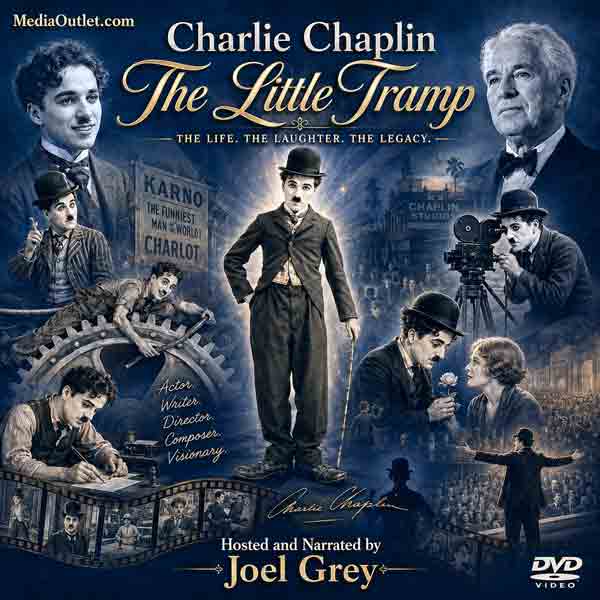
August 13: International Lefthanders Day:
-- Did you know Presidents Ronald Reagan, Bill Clinton and Barack
Obama were all left-handed? Rock out with Paul McCartney or Jimi
Hendrix, the world's greatest left-handed guitarist. (Stevie Ray
Vaughan, born right-handed, learned to play a left-handed guitar
like his hero, Hendrix). There's also Oprah Winfrey, Julia Roberts
and Lady Gaga, left-handers all. In baseball, there were the
legendary "southpaws, Babe Ruth and Sandy Koufax.
International Lefthanders Day celebrates the differences and
distinctiveness of left handed individuals. This day was first
celebrated by Dean R. Campbell, founder of the Lefthanders
International, Inc in 1976. So, if you're left-handed, grab your
left-handed cup and make a toast to all left-handers, everywhere!
In a world dominated by right-handers, Lefthanders Day on August
13 celebrates lefties and raises awareness on the issues faced by
left-handers in their daily lives. The day was first observed by
the founder of Lefthanders International, Inc. - Dean R. Campbell,
in 1976. and has been celebrated every year since. From the 1600s,
when left-handed people were thought of as being in cahoots with
the devil, to the present day, they continue to face difficulties
and challenges in accomplishing tasks. The Left-Handers Club was
founded in 1990 with the mission statement to keep members up to
date with developments and to serve as a bridge between the views
of left-handers and manufacturers. The club also provides help and
assistance to those who require it, and they continuously conduct
research on left-handedness and new items that can offer lefties
increased ease of use. The number of members has been increasing
with participants from all over the world since the club's
formation. As of now, the club is highly regarded and revered as a
pressure group representing all left-handers. Continuing the
tradition created by Campbell, the Left-Handers Club launched
International Lefthanders Day as a part of their organization on
August 13, 1992. The aim was to create awareness of the advantages
and disadvantages of left-handedness. The holiday is now
celebrated worldwide, with 20 regional events taking place in the
U.K. alone to commemorate the day, including sports matches and
parties. Some of the greatest people in history were/are
left-handed, like Mother Teresa, Walt Disney, Bill Gates, Charlie
Chaplin, and Albert Einstein, to name a few! On Sale Until
Midnight Tonight PT!
https://store.earthstation1.com/charlie-chaplin-the-little-tramp-hosted-by-joel-grey-dvd.html
Today's
EarthStation1.com 15% (Or More!) Off Commemorative Memorial Title:
Spanish-American War & Cuban War Of Independence DVD,
Download, USB
Today, August 13, 2026
August 13, 1898: The Decolonization Of
The Americas: The Cuban War Of Independence (The Necessary War):
The Spanish-American War: The Battle Of Manila (Filipino: Labanan
Sa Maynila; Spanish: Batalla De Manila) (The Mock Battle Of
Manila): -- Spanish and American forces engage in a mock battle
for Manila, after which the Spanish commander surrendered in order
to keep the city out of Filipino rebel hands. Known as the Battle
Of Manila or the Mock Battle Of Manila, it was a land engagement
which took place in Manila on August 13, 1898, at the end of the
Spanish-American War, four months after the decisive victory by
Commodore Dewey's Asiatic Squadron at The Battle Of Manila Bay.
The belligerents were Spanish forces led by Governor-General of
the Philippines Fermin Jaudenes and American forces led by United
States Army Brigadier General Wesley Merritt and United States
Navy Commodore George Dewey. American forces were supported by
units of the Philippine Revolutionary Army, led by Emilio
Aguinaldo. The battle is called the "Mock Battle Of Manila"
because the local Spanish and American generals, who were legally
still at war, secretly and jointly planned the battle to transfer
control of the city center from the Spanish to the Americans while
keeping the Philippine Revolutionary Army, led by Emilio Aguinaldo
who was fighting in support of the Americans, out of the city
center. On Sale Until Midnight Tonight PT!
https://store.earthstation1.com/spanishamerican-war-films-dvd.html
Today's
EarthStation1.com 15% (Or More!) Off Commemorative Memorial Title:
The Battle Of Britain & The Blitz Documentaries Set DVD, MP4,
USB
Today, August 13, 2026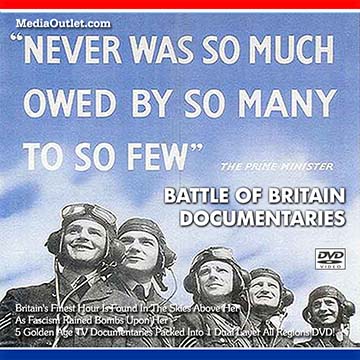
August 13, 1940: The European Civil War:
World War II: The Second European War (The European Theater Of
World War II): Aviation: Military Aviation: Air Warfare Of World
War II: The Battle Of Britain: Operation Eagle Attack (German:
Unternehmen Adlerangriff): Eagle Day (German: Adlertag): --
Adlertag (German: Eagle Day) begins, the first day of Unternehmen
Adlerangriff ("Operation Eagle Attack"), the German plan
to destroy the British Royal Air Force (RAF). Hitler gave the
German armed forces Directive No. 16 that ordered provisional
preparations for invasion of Britain. This operation was codenamed
Operation Sea Lion (Unternehmen Seelowe). Before this could be
carried out, air superiority or air supremacy was required. The
Luftwaffe was to destroy the RAF in order to prevent it from
attacking the invasion fleet or providing protection for the Royal
Navy's Home Fleet which might attempt to prevent a landing by sea.
On August 1, Hitler gave the Luftwaffe's commander-in-chief,
Reichsmarschall (Empire Marshal) Hermann Goring and the
Oberkommando der Luftwaffe (High Command of the Air Force) a
directive (Directive No. 17) to launch the air assault. The German
attacks that began on August 13 inflicted significant damage and
casualties on the ground, but, marred by poor intelligence and
communication, they did not make a significant impression on
Fighter Command's ability to defend British air space. Goering had
promised Hitler that Adlertag and Adlerangriff would achieve the
results required within days, or at worst weeks, but these
operations failed to destroy the RAF, or gain the necessary local
air superiority. As a result, Operation Sea Lion was postponed
indefinitely. On Sale Until Midnight Tonight PT!
https://store.earthstation1.com/battle-of-britain-dvd-dual-layer-wwii-documentaries.html
Today's
EarthStation1.com 15% (Or More!) Off Commemorative Memorial Title:
The Berlin Wall w/Mike Wallace JFK Ich Bin Ein Berliner & More
MP4 DVD
Today, August 13, 2026
August 13, 1961: The Aftermath Of World
War II: The Cold War: The Cold War (1953-1962): The Eastern Bloc
(The Communist Bloc, The Socialist Bloc, The Soviet Bloc): East
Germany (German: Ostdeutschland) (The German Democratic Republic
[GDR] [German: Deutsche Demokratische Republik, DDR]): Berlin: The
History Of Berlin: The Berlin Wall (German: Berliner Mauer):
Barbed Wire Sunday German: Stacheldrahtsonntag): -- The East
German military and police close the border between East and West
Berlin with barbed wire and begin the construction of what would
ultimately become known as The Berlin Wall. The intention of
closing the border was to prevent the migration of East Germans to
the West. The barbed wire was replaced by a 12 foot-high concrete
wall eventually extending 103 miles (166 km) around the perimeter
of West Berlin. The wall included electrified fences,
fortifications, and guard posts. Prior to the establishment of the
wall, approximately 3.5 million (or 20% of the population) East
German citizens defected to West Germany, many through the Berlin
border due to its lack of security. This posed a major issue to
the government as it was losing its substantial amounts of not
just its workforce but also its intellectuals. It Berlin War
became a notorious symbol of the Cold War. Presidents Kennedy and
Reagan made notable appearances at the wall accompanied by
speeches denouncing Communism. The wall was finally opened by an
East German governmental decree in November 1989 and torn down by
the end of 1990. On Sale Until Midnight Tonight PT!
https://store.earthstation1.com/the-berlin-wall-documentary-mike-wallace-dvd-mp4-download-usb-driv4.html
Today's
EarthStation1.com 15% (Or More!) Off Commemorative Memorial Title:
Appointment With Destiny Cortez and Montezuma DVD, Download, USB
Drive
Today, August 13, 2026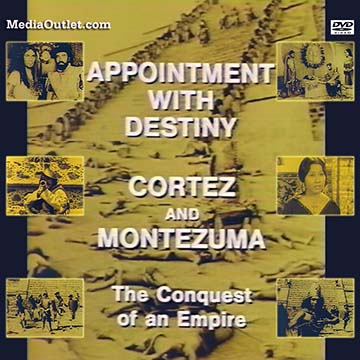
August 13, 1521: The Spanish Colonization
Of The Americas: Indigenous Rebellions In Mexico And Central
America: The Spanish Conquest Of The Aztec Empire (The Conquest Of
Mexico, The Spanish-Aztec War (1519-1521), The Conquest Of
Tenochtitlan, The Conquest Of Mexico-Tenochtitlan): The Siege Of
Tenochtitlan (The Siege Of Mexico-Tenochtitlan, The Fall Of
Tenochtitlan, The Fall Of Mexico-Tenochtitlan): -- After an
extended siege, forces led by Spanish conquistador Hernan Cortes
conquer the Aztec capital of Tenochtitlan and capture its ruler
Cuauhtemoc, the last Aztec Emperor (Tlatoani). The Siege Of
Tenochtitlan, the capital of the Aztec Empire, was a decisive
event in the Spanish conquest of Mexico. It occurred in 1521
following extensive manipulation of local factions and
exploitation of preexisting divisions by Spanish conquistador
Hernan Cortes, who was aided by the support of his indigenous
allies, and by his interpreter, slave and companion La Malinche,
also known as Malinalli, Malintzin or Dona Marina, the mother of
Cortes' first son, Martin. Although numerous battles were fought
between the Aztec Empire and the Spanish-led coalition, which was
itself composed primarily of indigenous (mostly Tlaxcaltec)
personnel, it was the Siege Of Tenochtitlan-its outcome probably
largely determined by the effects of a smallpox epidemic (which
devastated the Aztec population and dealt a severe blow to the
Aztec leadership while leaving an immune Spanish leadership
intact)-that directly led to the downfall of the Aztec
civilization and marked the end of the first phase of the Spanish
conquest of the Aztec Empire. The conquest of Mexico was a
critical stage in the Spanish colonization of the Americas.
Ultimately, Spain conquered Mexico and thereby gained substantial
access to the Pacific Ocean, which meant that the Spanish Empire
could finally achieve its original oceanic goal of reaching the
Asian markets. On Sale Until Midnight Tonight PT!
https://store.earthstation1.com/appointment-with-destiny-cortez-and-montezuma-dvd.html
Today's
EarthStation1.com 15% (Or More!) Off Commemorative Memorial Title:
Fidel Castro Documentaries DVD, Video Download, USB Flash Drive
Today, August 13, 2026
August 13, 1927: #BOTD: Fidel Castro,
Cuban communist revolutionary and politician who governed the
Republic of Cuba as Prime Minister from 1959 to 1976 and then as
President from 1976 to 2008 (d. November 25, 2016) is #born Fidel
Alejandro Castro Ruz out of wedlock at his father's farm in Biran
(at that time part of Mayari), Oriente Province, Cuba. Fidel
Castro was a Marxist-Leninist and Cuban nationalist who served as
the First Secretary of the Communist Party of Cuba from 1961 until
2011. Under his administration, Cuba became a one-party communist
state, while industry and business were nationalized and state
socialist reforms were implemented throughout society. The son of
a wealthy Spanish farmer, Castro adopted leftist anti-imperialist
politics while studying law at the University of Havana. After
participating in rebellions against right-wing governments in the
Dominican Republic and Colombia, he planned the overthrow of Cuban
President Fulgencio Batista, launching a failed attack on the
Moncada Barracks in 1953. After a year's imprisonment, Castro
traveled to Mexico where he formed a revolutionary group, The 26th
Of July Movement (Spanish: Movimiento 26 Julio (M 26-7), with his
brother Raul Castro and Che Guevara. Returning to Cuba, Castro
took a key role in the Cuban Revolution by leading the Movement in
a guerrilla war against Batista's forces from the Sierra Maestra.
After Batista's overthrow in 1959, Castro assumed military and
political power as Cuba's Prime Minister. The United States came
to oppose Castro's government and unsuccessfully attempted to
remove him by assassination, economic blockade and
counter-revolution, including the Bay Of Pigs Invasion of 1961.
Countering these threats, Castro formed an alliance with the
Soviet Union and allowed the Soviets to place nuclear weapons in
Cuba, sparking the Cuban Missile Crisis - a defining incident of
the Cold War - in 1962. Adopting a Marxist-Leninist model of
development, Castro converted Cuba into a one-party, socialist
state under Communist Party rule, the first in the Western
Hemisphere. Policies introducing central economic planning and
expanding healthcare and education were accompanied by state
control of the press and the suppression of internal dissent.
Abroad, Castro supported anti-imperialist revolutionary groups,
backing the establishment of Marxist governments in Chile,
Nicaragua and Grenada, as well as sending troops to aid allies in
the Yom Kippur, Ogaden, and Angolan Civil War. These actions,
coupled with Castro's leadership of the Non-Aligned Movement from
1979 to 1983 and Cuba's medical internationalism, increased Cuba's
profile on the world stage. Following the Soviet Union's
dissolution in 1991, Castro led Cuba through the economic downturn
of the "Special Period", embracing environmentalist and
anti-globalization ideas. In the 2000s, Castro forged alliances in
the Latin American "pink tide" - namely with Hugo
Chavez's Venezuela - and signed Cuba up to the Bolivarian Alliance
for the Americas. In 2006, Castro transferred his responsibilities
to Vice President Raul Castro, who was elected to the presidency
by the National Assembly in 2008. The longest-serving non-royal
head of state in the 20th and 21st centuries, Castro polarized
world opinion. His supporters view him as a champion of socialism
and anti-imperialism whose revolutionary regime advanced economic
and social justice while securing Cuba's independence from
American imperialism. Critics view him as a dictator whose
administration oversaw human-rights abuses, the exodus of a large
number of Cubans and the impoverishment of the country's economy.
Castro was decorated with various international awards and
significantly influenced different individuals and groups across
the world. Fidel Castro died in the night in Havana, Cuba of
undisclosed causes, aged aged 90. He was cremated the next day. A
funeral procession travelled 900 kilometres (560 mi) along the
island's central highway from Havana to Santiago de Cuba, tracing
in reverse, the route of the "Freedom Caravan" of
January 1959 in which Castro and his rebels took power, and after
nine days of public mourning, his ashes were entombed in the Santa
Ifigenia Cemetery in Santiago de Cuba. On Sale Until Midnight
Tonight PT!
https://store.earthstation1.com/fidel-castro-documentaries-dvd.html
Today's
EarthStation1.com 15% (Or More!) Off Commemorative Memorial Title:
Combat At Sea Documentary Series + Bonus MP4 Video Download DVD
Set
Today, August 13, 2026
August 13, 1779: The Age Of Enlightenment
(The Enlightenment, The Age Of Reason): The Age Of Revolution: The
Atlantic Revolutions: The American Enlightenment: The American
Revolution: The American Revolutionary War: The Naval History Of
The United States: The Penobscot Expedition: -- The most
significant loss of United States naval forces prior to the attack
on Pearl Harbor occurs when The Royal Navy defeats the Penobscot
Expedition, a 44-ship American naval task force mounted by the
Provincial Congress of the Province of Massachusetts Bay, the
largest American naval expedition of the war, with all 44 ships
lost through naval engagement or scuttling. The flotilla of 19
warships and 25 smaller support vessels sailed from Boston on July
19, 1779 for the upper Penobscot Bay in the District of Maine
carrying a ground expeditionary force of more than 1,000 colonial
Marines and militiamen. Also included was a 100-man artillery
detachment under the command of Lt. Colonel Paul Revere. The
Expedition's goal was to reclaim control of what is now mid-coast
Maine from the British who had seized it a month earlier and
renamed it New Ireland. The fighting took place both on land and
at sea in and around the mouth of the Penobscot and Bagaduce
Rivers at what is today Castine, Maine over a period of three
weeks in July and August of 1779. One of its greatest victories of
the war for the British, the Expedition was also the United
States' worst naval defeat until Pearl Harbor 162 years later in
1941. Casualties were: British: 25 killed, 35 wounded, 26
captured; American: 474 killed, wounded, captured or missing. On
Sale Until Midnight Tonight PT!
https://store.earthstation1.com/combat-at-sea-dvd-set-all-12-naval-warfare-tv-shows-6-di126.html
Today's
EarthStation1.com 15% (Or More!) Off Commemorative Memorial Title:
The Birth Of The Bomb: The Manhattan Project DVD, Download, USB
Drive
Today, August 13, 2026
August 13, 1942: The European Civil War:
World War II: The Second European War (The European Theater Of
World War II): Nuclear Weapons Programs Of The United States: The
Manhattan Project (Codename: Development Of Substitute Materials):
-- Major General Eugene Reybold of the U.S. Army Corps of
Engineers authorizes the construction of facilities that would
house the "Development Of Substitute Materials" project
- better known as The Manhattan Project, the research and
development undertaking that produced the first nuclear weapons.
It was led by the United States with the support of the United
Kingdom (which initiated the original Tube Alloys project) and
Canada. From 1942 to 1946, the project was under the direction of
Major General Leslie Groves of the U.S. Army Corps of Engineers.
Nuclear physicist Robert Oppenheimer was the director of the Los
Alamos Laboratory that designed the actual bombs. As engineer
districts by convention carried the name of the city where they
were located, the Army component of the project was designated the
Manhattan District; Manhattan gradually superseded the official
codename, Development of Substitute Materials, for the entire
project. Along the way, the project absorbed its earlier British
counterpart, Tube Alloys. The Manhattan Project began modestly in
1939, but grew to employ more than 130,000 people and cost nearly
2B USD (equivalent to about 23B USD in 2019). Over 90 percent of
the cost was for building factories and to produce fissile
material, with less than 10 percent for development and production
of the weapons. Research and production took place at more than
thirty sites across the United States, the United Kingdom, and
Canada. Two types of atomic bombs were developed concurrently
during the war: a relatively simple gun-type fission weapon and a
more complex implosion-type nuclear weapon. The Thin Man gun-type
design proved impractical to use with plutonium, and therefore a
simpler gun-type called Little Boy was developed that used
uranium-235, an isotope that makes up only 0.7 percent of natural
uranium. Since it was chemically identical to the most common
isotope, uranium-238, and had almost the same mass, separating the
two proved difficult. Three methods were employed for uranium
enrichment: electromagnetic, gaseous and thermal. Most of this
work was performed at the Clinton Engineer Works at Oak Ridge,
Tennessee. In parallel with the work on uranium was an effort to
produce plutonium, which was discovered by researchers at the
University of California, Berkeley, in 1940. After the feasibility
of the world's first artificial nuclear reactor, the Chicago
Pile-1, was demonstrated in 1942 at the Metallurgical Laboratory
in the University of Chicago, the Project designed the X-10
Graphite Reactor at Oak Ridge and the production reactors at the
Hanford Site in Washington state, in which uranium was irradiated
and transmuted into plutonium. The plutonium was then chemically
separated from the uranium, using the bismuth phosphate process.
The Fat Man plutonium implosion-type weapon was developed in a
concerted design and development effort by the Los Alamos
Laboratory. The project was also charged with gathering
intelligence on the German nuclear weapon project. Through
Operation Alsos, Manhattan Project personnel served in Europe,
sometimes behind enemy lines, where they gathered nuclear
materials and documents, and rounded up German scientists. Despite
the Manhattan Project's tight security, Soviet atomic spies
successfully penetrated the program. The first nuclear device ever
detonated was an implosion-type bomb at the Trinity test,
conducted at New Mexico's Alamogordo Bombing and Gunnery Range on
16 July 1945. Little Boy and Fat Man bombs were used a month later
in the atomic bombings of Hiroshima and Nagasaki, respectively,
with Manhattan Project personnel serving as bomb assembly
technicians, and as weaponeers on the attack aircraft. In the
immediate postwar years, the Manhattan Project conducted weapons
testing at Bikini Atoll as part of Operation Crossroads, developed
new weapons, promoted the development of the network of national
laboratories, supported medical research into radiology and laid
the foundations for the nuclear navy. It maintained control over
American atomic weapons research and production until the
formation of the United States Atomic Energy Commission in January
1947. On Sale Until Midnight Tonight PT!
https://store.earthstation1.com/the-birth-of-the-bomb-dvd-the-race-to-build-first-atom-bomb.html
Today's
EarthStation1.com 15% (Or More!) Off Commemorative Memorial Title:
Target For Tonight (1941) RAF Bomber Command DVD, Download, USB
Drive
Today, August 13, 2026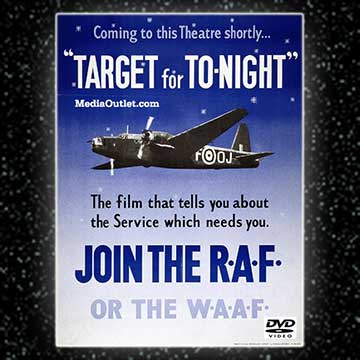
August 13, 1899: #BOTD: #HBD! Alfred
Hitchcock, English-American film director, producer and
screenwriter (d. April 29, 1980) is #born in Leytonstone, London,
England. Sir Alfred Joseph Hitchcock KBE is one of the most
influential and extensively studied filmmakers in the history of
cinema. Known as the "Master of Suspense", he directed
over 50 feature films in a career spanning six decades, becoming
as well known as any of his actors thanks to his many interviews,
his cameo roles in most of his films, and his hosting and
producing of the television anthology Alfred Hitchcock Presents
(1955-1965). His films garnered a total of 46 Oscar nominations
and 6 wins. Hitchcock entered the film industry in 1919 as a title
card designer after training as a technical clerk and copy writer
for a telegraph-cable company. He made his directorial debut with
the British-German silent film The Pleasure Garden (1925). His
first successful film, The Lodger: A Story of the London Fog
(1927), helped to shape the thriller genre, while his 1929 film,
Blackmail, was the first British "talkie". Two of his
1930s thrillers, The 39 Steps (1935) and The Lady Vanishes (1938),
are ranked among the greatest British films of the 20th century.
By 1939, Hitchcock was a filmmaker of international importance,
and film producer David O. Selznick persuaded him to move to
Hollywood. A string of successful films followed, including
Rebecca (1940), Foreign Correspondent (1940), Suspicion (1941),
Shadow of a Doubt (1943), and Notorious (1946). Rebecca won the
Academy Award for Best Picture, although Hitchcock himself was
only nominated as Best Director; he was also nominated for
Lifeboat (1944) and Spellbound (1945), although he never won the
Best Director Academy Award. The "Hitchcockian" style
includes the use of camera movement to mimic a person's gaze,
thereby turning viewers into voyeurs, and framing shots to
maximise anxiety and fear. The film critic Robin Wood wrote that
the meaning of a Hitchcock film "is there in the method, in
the progression from shot to shot. A Hitchcock film is an
organism, with the whole implied in every detail and every detail
related to the whole." After a brief lull of commercial
success in the late 1940s, Hitchcock returned to form with
Strangers on a Train (1951) and Dial M For Murder (1954). By 1960
Hitchcock had directed four films often ranked among the greatest
of all time: Rear Window (1954), Vertigo (1958), North by
Northwest (1959), and Psycho (1960), the first and last of these
garnering him Best Director nominations. In 2012, Vertigo replaced
Orson Welles's Citizen Kane (1941) as the British Film Institute's
greatest film ever made based on its world-wide poll of hundreds
of film critics. By 2018 eight of his films had been selected for
preservation in the United States National Film Registry,
including his personal favourite, Shadow of a Doubt (1943). He
received the BAFTA Fellowship in 1971, the AFI Life Achievement
Award in 1979 and was knighted in December that year, four months
before he died of kidney failure in his Bel Air home, aged 80.
Donald Spoto, one of Hitchcock's biographers, wrote that Hitchcock
had declined to see a priest, but according to Jesuit priest Mark
Henninger, he and another priest, Tom Sullivan, celebrated Mass at
the filmmaker's home, and Sullivan heard his confession. Hitchcock
was survived by his wife and daughter. His funeral was held at
Good Shepherd Catholic Church in Beverly Hills on April 30, after
which his body was cremated. His remains were scattered over the
Pacific Ocean on May 10, 1980. On Sale Until Midnight Tonight PT!
https://store.earthstation1.com/target-for-tonight-1941-raf-bomber-command-wwii1941.html
Today's
EarthStation1.com 15% (Or More!) Off Commemorative Memorial Title:
Forgotten Fatherland: Nueva Germania Aryan Settlement DVD, MP4,
USB
Today, August 13, 2026
August 13, 1876: Aesthetics: Performing
Arts: Premieres: Theatre Premieres: Musical Premieres: Opera
Premieres: -- The first performance as a cycle of Richard Wagner's
Der Ring Des Nibelungen (The Ring Of The Nibelung) WWV 86, at the
recently completed Bayreuth Festspielhaus, beginning with Das
Rheingold on August 13, Die Walkure on August 14, Siegfried on
August 16 and ending with Gotterdammerung on August 17. Opera
stage director Anthony Freud stated that this premiere performance
of Der Ring des Nibelungen cycle "marks the high-water mark
of our art form, the most massive challenge any opera company can
undertake." Der Ring Des Nibelungen is a cycle of four
German-language epic music dramas composed by Richard Wagner. The
works are based loosely on characters from Norse sagas and the
Nibelungenlied. It is often referred to as the Ring cycle,
Wagner's Ring, or simply The Ring. The composer termed the cycle a
"Buhnenfestspiel" (stage festival play), structured in
three days preceded by a Vorabend ("preliminary evening").
Wagner wrote the libretto and music over the course of about
twenty-six years, from 1848 to 1874. The four parts that
constitute the Ring cycle are, in sequence: Das Rheingold (The
Rhinegold); Die Walkure (The Valkyrie); Siegfried; Gotterdammerung
(Twilight Of The Gods). Individual works of the sequence have
occasionally been performed separately, and indeed the operas
contain dialogues that mention events in the previous operas, so
that a viewer could watch any of them without having watched the
previous parts and still understand the plot. However, Wagner
intended them to be performed in series. On Sale Until Midnight
Tonight PT!
https://store.earthstation1.com/forgotten-fatherland-dvd-nueva-germania-aryan-settlement-dvd-mp4-us4.html
Today's
EarthStation1.com 15% (Or More!) Off Commemorative Memorial Title:
Charlie And His Orchestra WWII Nazi Jazz Radio MP3 CD, Download,
USB
Today, August 13, 2026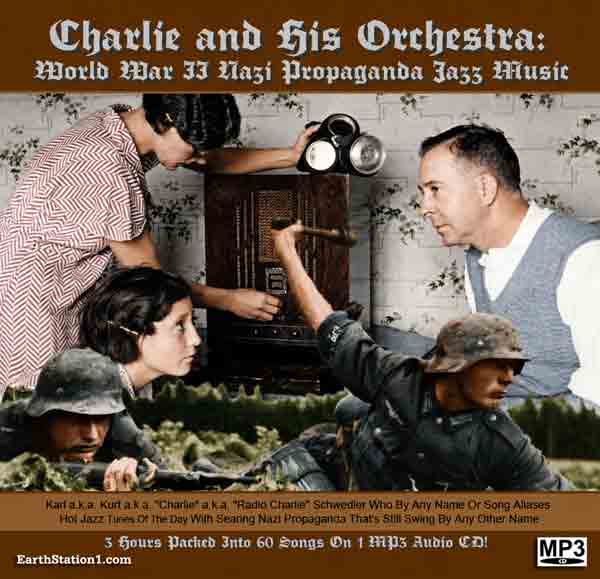
August 13, 1902: #BOTD: Karl Schwedler,
a.k.a. "Charlie Schwedler" and "Radio Charlie",
singer and leader of the Nazi propaganda jazz band Charlie and His
Orchestra during World War II (d. June 20, 1970) is #born Karl
Emil Heinrich Schwedler in Duisburg, Germany. Though little is
known of his early life, Karl Emil Heinrich Schwedler's father,
Wilhelm, is known to have been a plumber, and that Karl lived in
Cologne in the 1920s and moved to Dusseldorf in 1930. By November
1939, he was employed by the USA section of the Nazi Foreign
Ministry's broadcasting department (Kultur-R). Described by
British-born Nazi collaborator Norman Baillie-Stewart as a
"crooner" and a "playboy" who spoke excellent
English, Schwedler was held in high regard for his propaganda work
by Foreign Minister Joachim Von Ribbentrop himself. Sometime in
1939, Schwedler, now called "Charlie", formed a Nazi
swing band, Charlie and His Orchestra, who made a series of
"cabaret" recordings that were parodies of popular
English-language songs with Nazi-favourable lyrics. Winston
Churchill was alleged to be a fan, finding the new lyrics
hilarious, particularly those about himself. Charlie and His
Orchestra recorded thirty-seven tunes that were monitored by the
BBC. Schwedler remained in Berlin after most of the rest of his
orchestra (including Lutz Templin, who remained a respected
musician after the war) were evacuated to Stuttgart in 1943.
Saxophone player Teddy Kleindin recalled Schwedler working as a
croupier in Berlin after the Nazi defeat in 1945. After briefly
settling in Bavaria and Dusseldorf, Schwedler (along with wife and
two children, Bernd and Scarlet) emigrated to the United States in
August 1960, after which he passed into obscurity. According to an
article in Der Spiegel, Schwedler became a successful businessman
and retired in Tegernsee, where he died. His burial details are
not publicly disclosed. On Sale Until Midnight Tonight PT!
https://store.earthstation1.com/charlie-and-his-orchestra-mp3-cd-wwii-nazi-jazz-radi3.html
Today's
EarthStation1.com 15% (Or More!) Off Commemorative Memorial Title:
Command Performance WWII Old Time Radio Series MP3 DVD, Download,
USB
Today, August 13, 2026
August 13, 1895: #BOTD: #HBD! Bert Lahr,
American actor of stage and screen, vaudevillian, singer and
comedian (d. 1967) is #born Irving Lahrheim at First Avenue and
81st Street in the Yorkville section of Upper East Side of
Manhattan, New York City to German-Jewish immigrants Augusta
(1871-1932) and Jacob Lahrheim (1870-1947), an upholsterer. Lahr
is best known for his role as the Cowardly Lion, as well as his
counterpart Kansas farmworker "Zeke", in the MGM
adaptation of The Wizard Of Oz (1939). He was well known for his
quick-witted humor and his work in burlesque, vaudeville, and on
Broadway. Lahr had three children: a son, Herbert (1928-2002),
with his Puerto Rican vaudeville partner first wife Mercedes
Delpino, and a son John (born 1941) and daughter Jane (born 1943)
with his second wife Mildred Schroeder. John Lahr is a
London-based drama critic who married the actress and comedian
turned psychotherapist Connie Booth (Fawlty Towers) in 2000; she
was previously married to British actor/comedian John Cleese. Jane
Lahr is an author and literary editor who was married to drama
critic Martin Gottfried. Lahr died at the age of 72 in New York
City. Around the time of his death, he was filming The Night They
Raided Minsky's. The official cause of death was listed as
pneumonia. Lahr had been hospitalized on November 21 for what was
reported as a back ailment. However, his son John Lahr explained
that although two weeks earlier, Bert "had returned home at 2
a.m., chilled and feverish, from the damp studio where The Night
They Raided Minsky's was being filmed," and although
"newspapers reported the cause of death as pneumonia...he
succumbed to cancer, a disease he feared but never knew he had."
(Bert Lahr's father had also died of cancer.) The official cause
of death was reported as being massive intestinal hemorrhage. At
the time, most of Lahr's scenes had already been shot. All in the
Family creator/producer Norman Lear told The New York Times that
"through judicious editing, we will be able to shoot the rest
of the film so that his wonderful performance will remain intact."
The producers used test footage of Lahr, plus an uncredited voice
double and a body double, burlesque actor Joey Faye, to complete
Lahr's role. Bert Lahr is buried at the Union Field Cemetery in
Ridgewood, Queens, New York. On Sale Until Midnight Tonight PT!
https://store.earthstation1.com/command-performance-in-world-war-ii-radio-broadcasts-mp3-c3.html
Today's
EarthStation1.com 15% (Or More!) Off Commemorative Memorial Title:
Apollo 11: Flight To The Moon With Wally Schirra CD, MP3 Download,
USB
Today, August 13, 2026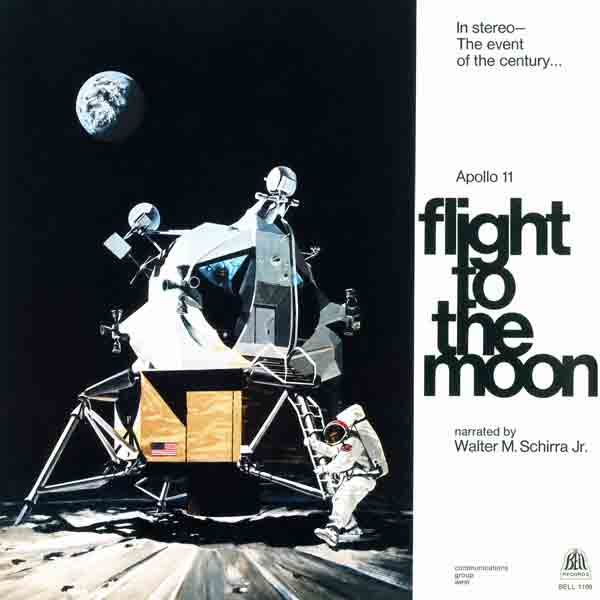
August 13, 1969: Outer Space Firsts:
Mission To The Moon Quarantines: The History Of Rocketry: The
History Of Spaceflight: The Aftermath Of World War II: The Cold
War: The Space Age: The Space Race: Space Programs Of The United
States: Human Spaceflight Programs: The Discovery And Exploration
Of The Solar System: Missions To The Moon: Project Apollo: Apollo
11 (AS-11): -- The Apollo 11 astronauts are released from a
three-week quarantine to enjoy a ticker tape parade in New York
City. That evening, at a state dinner in Los Angeles, they are
awarded the Presidential Medal Of Freedom by U.S. President
Richard Nixon. On July 16, 1969, the Apollo 11 Lunar landing
mission began with liftoff from Kennedy Space Center at 9:37 a.m.
Apollo 11 was the spaceflight that landed the first two people on
the Moon. Mission commander Neil Armstrong and pilot Buzz Aldrin,
both American, landed the lunar module Eagle on July 20, 1969, at
20:17 UTC. Armstrong became the first person to step onto the
lunar surface six hours after landing on July 21 at 02:56:15 UTC;
Aldrin joined him about 20 minutes later. They spent about two and
a quarter hours together outside the spacecraft, and collected
47.5 pounds (21.5 kg) of lunar material to bring back to Earth.
Michael Collins piloted the command module Columbia alone in lunar
orbit while they were on the Moon's surface. Armstrong and Aldrin
spent 21.5 hours on the lunar surface before rejoining Columbia in
lunar orbit. Apollo 11 was launched by a Saturn V rocket from
Kennedy Space Center on Merritt Island, Florida, on July 16 at
9:32 am EDT (13:32 UTC) and was the fifth manned mission of NASA's
Apollo program. The Apollo spacecraft had three parts: a command
module (CM) with a cabin for the three astronauts, and the only
part that returned to Earth; a service module (SM), which
supported the command module with propulsion, electrical power,
oxygen, and water; and a lunar module (LM) that had two stages - a
descent stage for landing on the Moon, and an ascent stage to
place the astronauts back into lunar orbit. After being sent to
the Moon by the Saturn V's third stage, the astronauts separated
the spacecraft from it and traveled for three days until they
entered into lunar orbit. Armstrong and Aldrin then moved into the
lunar module Eagle and landed in the Sea of Tranquility. The
astronauts used Eagle's upper stage to lift off from the lunar
surface and rejoin Collins in the command module. They jettisoned
Eagle before they performed the maneuvers that blasted them out of
lunar orbit on a trajectory back to Earth. They returned to Earth
and splashed down in the Pacific Ocean on July 24 after more than
eight days in space. The landing was broadcast on live TV to a
worldwide audience. Armstrong stepped onto the lunar surface and
described the event as "one small step for [a] man, one giant
leap for mankind." Apollo 11 was the beginning of the end of
the Space Race (Apollo-Soyuz was the end effectively) and
fulfilled a national goal proposed in 1961 by U.S. President John
F. Kennedy: "before this decade is out, of landing a man on
the Moon and returning him safely to the Earth." On Sale
Until Midnight Tonight PT!
https://store.earthstation1.com/apollo-11-flight-to-the-moon-by-walter-m-schirra-jr-mp3113.html
Today's
EarthStation1.com 15% (Or More!) Off Commemorative Memorial Title:
The Western Tradition TV Series DVD, MP4 Video Download, USB Drive
Today, August 13, 2026
August 13, 1624: France: The History Of
France: Governments Of France: The French Monarchy (The Monarchy
Of The Kingdom Of France): -- King Louis XIII appoints Cardinal
Richelieu as prime minister. Armand Jean du Plessis, 1st Duke of
Richelieu, French clergyman, nobleman, and statesman known as
Cardinal Richelieu, nicknamed l'Eminence Rouge, (French: "The
Red Eminence"), a term derived from the title "Eminence"
applied to cardinals and from the red robes that they customarily
wear (September 9, 1585 - December 4, 1642) was consecrated as a
bishop in 1607 and was appointed Foreign Secretary in 1616.
Richelieu soon rose in both the Catholic Church and the French
government, becoming a cardinal in 1622, and King Louis XIII's
chief minister in 1624. He remained in office until his death in
1642. He sought to consolidate royal power and crush domestic
factions. By restraining the power of the nobility, he transformed
France into a strong, centralized state. His chief foreign policy
objective was to check the power of the Austro-Spanish Habsburg
dynasty, and to ensure French dominance in the Thirty Years' War
that engulfed Europe. Although he was a cardinal, he did not
hesitate to make alliances with Protestant rulers in attempting to
achieve his goals. While a powerful political figure, events like
the Day of the Dupes, a day in November 1630 on which the enemies
of Cardinal Richelieu mistakenly believed that they had succeeded
in persuading the French King to dismiss Richelieu from power,
show that in fact he very much depended on the king's confidence
to keep this power. He was succeeded by Cardinal Mazarin, whose
career he had fostered. On Sale Until Midnight Tonight PT!
https://store.earthstation1.com/the-western-tradition-dvd-set-all-52-shows-13-d5213.html
Today's
EarthStation1.com 15% (Or More!) Off Commemorative Memorial Title:
The French Revolution Series + Irish Rebellion & You Are There
MP4 DVD
Today, August 13, 2026
August 13, 1792: The Age Of Enlightenment
(The Enlightenment, The Age Of Reason): The Age Of Revolution: The
Atlantic Revolutions: The French Revolution: The Arrest Of King
Louis XVI: -- The National Tribunal Of The National Convention
arrests King Louis XVI Of France and declare him an enemy of the
people, a designation for a political or class opponent of the
group in power and/or the society they rule. He was sent to the
Temple, a medieval fortress in Paris built by the Knights Templar
that was then used as a prison, located at what is now the garden
at the Square du Temple, location of the Paris Metro rapid transit
subway station that serves the carreau du temple (covered market)
and the Palais de Justice (Courthouse) of the third
arrondissement. On 21 September, the National Assembly declared
France to be a Republic (The French First Republic) and abolished
the monarchy. Louis was stripped of all of his titles and honours,
and from this date was known as Citoyen (Citizen) Louis Capet, in
reference to Hugh Capet, the founder of the Capetian dynasty -
which the revolutionaries interpreted as Louis' family name. He
was tried by the National Convention (self-instituted as a
tribunal for the occasion), found guilty of high treason, and
executed by guillotine on January 21, 1793. On Sale Until Midnight
Tonight PT!
https://store.earthstation1.com/the-french-revolution-dvd-3-part-tv-documentary-serie3.html
Today's
EarthStation1.com 15% (Or More!) Off Commemorative Memorial Title:
The Struggles For Poland TV Series + Bonus MP4 Video Download DVD
Set
Today, August 13, 2026
August 13, 1920: The Aftermath Of World
War I: 20th Century Revolutions: The Revolutions Of 1917-1923: The
Interwar Period (The Interbellum, Between The Wars): The Russian
Revolution: The Russian Civil War: The Western Front Of The
Russian Civil War (Western Front (RSFSR)): The Ukrainian War Of
Independence (The Ukrainian-Soviet War): The Lithuanian Wars Of
Independence, The Freedom Struggles): The Latvian War Of
Independence (Latvia's Freedom Battles, The Latvian War Of
Liberation): The Polish-Soviet War: The Battle Of Warsaw (1920)
(Polish: Bitwa Warszawska; Russian: Varshavskaya Bitva) (The
Miracle On The Vistula (Polish: Cud Nad Wisla): -- The Battle Of
Warsaw begins and continues until August 25, when the Poles, on
the verge of total defeat, repulsed and won a decisive victory
over the Red Army. As Soviet forces invaded Poland in summer 1920,
the Polish army retreated westward in disarray. The Polish forces
seemed on the verge of disintegration and observers predicted a
decisive Soviet victory. Red Army forces commanded by Mikhail
Tukhachevsky approached the Polish capital of Warsaw and the
nearby Modlin Fortress. On August 16, Polish forces commanded by
Jozef Pilsudski counterattacked from the south, disrupting the
enemy's offensive, forcing the Russian forces into a disorganized
withdrawal eastward and behind the Neman River. Estimated Russian
losses were 10,000 killed, 500 missing, 30,000 wounded, and 66,000
taken prisoner, compared with Polish losses of some 4,500 killed,
10,000 missing, and 22,000 wounded. The defeat crippled the Red
Army; Vladimir Lenin, the Bolshevik leader, called it "an
enormous defeat" for his forces. In the following months,
several more Polish follow-up victories saved Poland's
independence and led to a peace treaty with Soviet Russia and
Soviet Ukraine later that year, securing the Polish state's
eastern frontiers until 1939. The British diplomat Edgar Vincent
regards this event as one of the most important battles in history
on his expanded list of most decisive battles, since the Polish
victory over the Soviets stopped the spread of communism to
Europe. The Polish-Soviet War (February 1919 - March 1921) was
fought by the Second Polish Republic, Ukrainian People's Republic
and the proto-Soviet Union (Soviet Russia and Soviet Ukraine) for
control of an area equivalent to today's western Ukraine and parts
of modern Belarus. Although united under the same communist
leadership, Soviet Russia and Soviet Ukraine were theoretically
independent entities but in practice were in a Soviet Union since
1918, the union was formerly legalized in 1922. The Peace of Riga,
also known as the Treaty of Riga, that ended the Polish-Soviet War
was signed in Riga on 18 March 1921, between Poland, Soviet Russia
(acting also on behalf of Soviet Belarus) and Soviet Ukraine.
========= August 13, 1920: The Aftermath Of World War I: 20th
Century Revolutions: The Revolutions Of 1917-1923: The Interwar
Period (The Interbellum, Between The Wars): The Russian
Revolution: The Russian Civil War: The Western Front Of The
Russian Civil War (Western Front (RSFSR)): The Ukrainian War Of
Independence (The Ukrainian-Soviet War): The Lithuanian Wars Of
Independence, The Freedom Struggles): The Latvian War Of
Independence (Latvia's Freedom Battles, The Latvian War Of
Liberation): The Polish-Soviet War: The Battle Of Radzymin (1920)
(Polish: Bitwa Pod Radzyminem): -- One of the bloodiest and most
intense battles of the Polish-Soviet War occurs near the town of
Radzymin, some 20 kilometres (12 mi) north-east of Warsaw, and
lasts unil August 16, 1920; along with the Battle of Ossow and the
Polish counteroffensive from the Wieprz River area, this
engagement was a key part of what later became known as the Battle
Of Warsaw. The first phase of the battle began with a frontal
assault by the Red Army on the Praga bridgehead. The Soviet forces
captured Radzymin on August 14 and breached the lines of the 1st
Polish Army, which was defending Warsaw from the east. Radzymin
changed hands several times in heavy combat. Foreign diplomats,
with the exception of the British and Vatican ambassadors, hastily
left Warsaw. The plan for the battle was straightforward for both
sides. The Russians wanted to break through the Polish defences to
Warsaw, while the Polish aim was to defend the area long enough
for a two-pronged counteroffensive from the south, led by General
Jozef Pilsudski, and north, led by General Wladyslaw Sikorski, to
outflank the attacking forces. After three days of intense
fighting, the corps-sized 1st Polish Army under General Franciszek
Latinik managed to repel a direct assault by six Red Army rifle
divisions at Radzymin and Ossow. The struggle for control of
Radzymin forced General Jozef Haller, commander of the Polish
Northern Front, to start the 5th Army's counterattack earlier than
planned. Radzymin was recaptured on August 15, and this victory
proved to be one of the turning points of the Battle Of Warsaw.
The strategic counteroffensive was successful, pushing Soviet
forces away from Radzymin and Warsaw and eventually crippling four
Soviet armies. On Sale Until Midnight Tonight PT!
https://store.earthstation1.com/the-struggles-for-poland-dvd-set-all-9-shows-5-dis95.html
Today's
EarthStation1.com 15% (Or More!) Off Commemorative Memorial Title:
China In Revolution 1911-1949 TV Series DVD, Download, USB Flash
Drive
Today, August 13, 2026
August 13, 1937: China: The History Of
China: The Century Of Humiliation (The Hundred Years Of National
Humiliation) (1838-1945): The Sino-Japanese Wars: World War II:
The Asia-Pacific War: The Second Sino-Japanese War (The War Of
Resistance Against Japanese Aggression): The Battle Of Shanghai
(Chinese: Song Hu Huizhan): -- The Battle Of Shanghai begins, the
first of the twenty-two major engagements fought between the
National Revolutionary Army (NRA) of the Republic Of China (ROC)
and the Imperial Japanese Army (IJA) of the Empire Of Japan during
the Second Sino-Japanese War. It was one of the largest and
bloodiest battles of the entire war, described by Peter Harmsen as
"Stalingrad on the Yangtze". Since 1931, China and Japan
had been embroiled in incessant, smaller conflicts, often known as
"incidents," that saw China lose territories piece by
piece. The term "incident" was used by the Japanese
Imperial High Command to play down the Japanese invasions of
China. Although Japan had not formally declared war on China, by
August 1937, following the Marco Polo Bridge Incident of July 7
and the ensuing Japanese invasion of North China, a de facto state
of war existed between China and Japan. On Sale Until Midnight
Tonight PT!
https://store.earthstation1.com/china-in-revolution-19111949-dvd-2-part-tv-documenta191119492.html
Today's
EarthStation1.com 15% (Or More!) Off Commemorative Memorial Title:
Kerouac: The Movie (1985) Jack Kerouac Documentary DVD, Download,
USB
Today, August 13, 2026
August 13, 1919: #BOTD: #HBD! George
Shearing, English jazz pianist, composer and bandleader who for
many years led a popular jazz group that recorded for Discovery
Records, MGM Records and Capitol Records (d. February 14, 2011) is
#born George Albert Shearing, born blind to working-class parents
in Battersea, London, England. Sir George Albert Shearing OBE was
the composer of over 300 titles, including the jazz standards
"Lullaby of Birdland" and "Conception", and
had multiple albums on the Billboard charts during the 1950s,
1960s, 1980s and 1990s. He died of heart failure in New York City,
at the age of 91. He is buried at Saint Thomas Episcopal Church
Columbarium on Fifth Avenue, Manhattan, New York City. On Sale
Until Midnight Tonight PT!
https://store.earthstation1.com/kerouac-the-movie-dvd-1985-jack-kerouac-documentary-1985.html
Today's
EarthStation1.com 15% (Or More!) Off Commemorative Memorial Title:
DJ Madness! 1950s-60s-70s Radio Shows DVD, MP3 Download, USB Drive
Today, August 13, 2026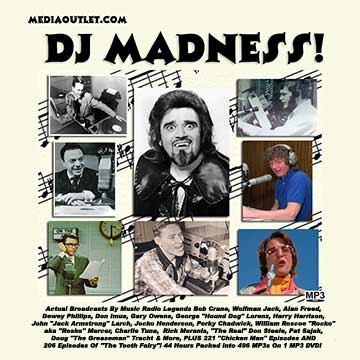
August 13, 1921: #BOTD: #HBD! Jimmy
McCracklin, African American pianist, singer, and songwriter whose
style contained West Coast blues, Jump blues, and R & B (d.
December 20, 2012) is #born James David Walker Jr. in Elaine,
Arkansas, U.S.. Over a career that spanned seven decades, he said
he had written almost a thousand songs and had recorded hundreds
of them. He gained national popularity after appearing on American
Bandstand in support of his self-written single "The Walk"
(1957), subsequently released by Checker Records in 1958. It went
to No. 5 on the Billboard R & B chart and No. 7 on the pop
chart after over 10 years of McCracklin selling records only to
the black community on a series of small labels. McCracklin
recorded over 30 albums, and earned four gold records. Tom
Mazzolini of the San Francisco Blues Festival said of him, "He
was probably the most important musician to come out of the Bay
Area in the post-World War II years." Jimmy McCracklin died
in San Pablo, California in the San Francisco Bay Area after a
long illness, aged 91. He is buried at Sacramento Valley National
Cemetery in Dixon, California. On Sale Until Midnight Tonight PT!
https://store.earthstation1.com/dj-radio-airchecks-mp3-dvd-1950s60s70s-dis319506070.html
Today's
EarthStation1.com 15% (Or More!) Off Commemorative Memorial Title:
The Steve Allen TV Shows MegaSet DVD, Video Download, USB Flash
Drive
Today, August 13, 2026
August 13, 1929: #BOTD: #HBD! Pat
Harrington, Jr., American voice, stage, and television actor, best
known for his role as building superintendent "Schneider"
on the CBS sitcom One Day At A Time (d. January 6, 2016) is #born
Daniel Patrick Harrington Jr. in Manhattan. Known as Pat
Harrington Jr. or simply Pat Harrington, he became famous in the
1950s as a member of Steve Allen's television comedy troupe, the
"Men on the Street" (which also included Don Knotts,
Bill Dana, Tom Poston and Louis Nye). He made many appearances as
the comedic Italian immigrant "Guido Panzini" on The
Jack Paar Show in the mid-1950s, and later recorded the comedy
album as "Pat Harrington Jr. As Guido Panzini with Bill
Dana". In the 1959-60 season, he played the recurring role of
Pat Hannigan in eleven episodes of Danny Thomas's CBS-TV sitcom,
The Danny Thomas Show. In the 1964-1965 television season, he
guest-starred on numerous programs, including ABC's sitcom The
Bing Crosby Show. In a 1965 episode of The Man from U.N.C.L.E.
("The Bow-Wow Affair"), Harrington reprised his role as
"Guido Panzini" (who he also played in the February 8,
1966 episode of McHale's Navy and in the May 2, 1983 episode of
One Day at a Time). He also guest-starred on two episodes of The
Munsters. In 1967, he appeared in the Elvis Presley film Easy
Come, Easy Go. He also parodied Get Smart in an episode of F
Troop, in which he played secret agent "B Wise".
Harrington was well known for his role as affable building
superintendent "Dwayne Schneider" on the 1975-1984
television sitcom One Day at a Time. He won both an Emmy Award and
a Golden Globe Award for his work on this series. He reprised his
role as Schneider in a series of commercials in the late 1980s for
Trak Auto Parts after the show ended. He appeared in an episode of
The King of Queens in 2006. In 2012, he also appeared as a guest
star on Hot In Cleveland. In his final yeas, Harrington suffered
from Alzheimer's disease, and fell in early November 2015. He
suffered a small brain hemorrhage and spent three weeks in a
hospital and nursing home. He died two months later in Los
Angeles, California at age 86 on his One Day At A Time co-star
Bonnie Franklin's birthday, though she predeceased him in 2013.
His remains were cremated, and the ashes were given to his widow
Sally Cleaver. On Sale Until Midnight Tonight PT!
https://store.earthstation1.com/complete-steve-allen-tv-shows-4-dual-layer-dvd-megase4.html
Today's
EarthStation1.com 15% (Or More!) Off Commemorative Memorial Title:
WPIX at 40! (1988) New York City's TV Channel 11 DVD, Download,
USB
Today, August 13, 2026
August 13, 1995: #DOTD: #RIP: Mickey
Mantle, American professional baseball player and sportscaster (b.
October 20, 1931) #dies at 2:10 a.m. at Baylor University Medical
Center aged 63 with his wife Meryln and son David at his side, two
months after receiving a liver transplant at that same hospital,
and five months after his mother had died at age 91. The Yankees
played the Indians that day and honored him with a tribute. The
team played the rest of the season with black mourning bands
topped by a number 7 on their left sleeves. At Mantle's funeral,
Eddie Layton played "Somewhere Over the Rainbow" on the
Hammond organ because Mickey had once told him that it was his
favorite song. Roy Clark sang and played "Yesterday, When I
Was Young". Mantle is interred in the Mantle Family
Mausoleum, located in the St. Matthew section of the
Sparkman-Hillcrest Memorial Park Cemetery in Dallas. As per his
request, the phrase "A Great Teammate" was carved on the
plaque marking his resting place. Mickey Mantle was born Mickey
Charles Mantle in Spavinaw, Oklahoma. Nicknamed The Commerce Comet
and The Mick, Mantle played his entire Major League Baseball (MLB)
career (1951-1968) with the New York Yankees as a center fielder,
right fielder, and first baseman. Mantle was one of the best
players and sluggers and is regarded by many as the greatest
switch hitter in baseball history. Mantle was inducted into the
Baseball Hall of Fame in 1974 and was elected to the Major League
Baseball All-Century Team in 1999. Mantle was one of the greatest
offensive threats of any center fielder in baseball history. He
has the second highest career OPS+ among center fielders, (behind
Mike Trout) and he had the highest stolen base percentage in
history at the time of his retirement. In addition, compared to
the other four center fielders on the All-Century team, he had the
lowest career rate of grounding into double plays, and he had the
highest World Series on-base percentage and World Series slugging
percentage. He also had an excellent .984 fielding percentage when
playing center field. Mantle was noted for his ability to hit for
both average and power, especially tape measure home runs, a term
that had its origin in a play-by-play caller reacting to one of
Mantle's 1953 home runs. He hit 536 MLB career home runs, batted
.300 or more ten times, and is the career leader (tied with Jim
Thome) in walk-off home runs, with 13 - twelve in the regular
season, one in the postseason. He is also the only player in
history to hit 150 home runs from both sides of the plate. Mantle
is 16th all-time in home runs per at bats. He is 18th in on-base
percentage. He was safe three out of four times he attempted to
steal a base. He won the MVP Award three times, came in second
three times, and came within nine votes of winning five times.
Mantle won the Triple Crown in 1956, when he led the major leagues
in batting average (.353), home runs (52), and runs batted in
(RBI) (130). He later wrote a book (My Favorite Summer 1956) about
his best year in baseball. He was an All-Star for 16 seasons,
playing in 16 of the 20 All-Star Games that were played during his
career. He was an American League (AL) Most Valuable Player (MVP)
three times and a Gold Glove winner once. Mantle appeared in 12
World Series including seven championships, and he holds World
Series records for the most home runs (18), RBIs (40), extra-base
hits (26), runs (42), walks (43), and total bases (123). =========
August 13, 2007: #DOTD: #RIP: Phil Rizzuto, nicknamed "The
Scooter", American Major League Baseball shortstop and
sportscaster who spent his entire 13-year baseball career with the
New York Yankees (1941-1956), and was elected to the National
Baseball Hall of Fame in 1994 (b. September 25, 1917) #dies in his
sleep, three days short of the 51st anniversary of his last game
as a Yankee, exactly twelve years after the death of Mickey
Mantle, and just over a month shy of his 90th birthday. He had
been in declining health for several years and was living at a
nursing home in West Orange, New Jersey for the last months of his
life. At the time of his death, at age 89, Rizzuto was the oldest
living member of Baseball's Hall of Fame. Rizzuto was survived by
his wife, Cora (who died in 2010), daughters Cindy Rizzuto,
Patricia Rizzuto and Penny Rizzuto Yetto, son Phil Rizzuto Jr.,
and two granddaughters. His remains were cremated, and the ashes
given to his widow Cora. Phil Rizzuto was born Philip Francis
Rizzuto in Brooklyn, New York City, New York, the son of a
streetcar motorman and his wife, both of whom were originally from
Calabria, Italy. A popular figure on a team dynasty that captured
10 American League titles and seven World Championships in his 13
seasons, Rizzuto holds numerous World Series records for
shortstops. His best statistical season was 1950, when he was
named the American League' Most Valuable Player. Despite this
offensive peak, Rizzuto was a classic "small ball"
player, noted for his strong defense in the infield. The
slick-fielding Rizzuto is also regarded as one of the best bunters
in baseball history. When he retired, his 1,217 career double
plays ranked second in major league history, trailing only Luke
Appling' total of 1,424, and his .968 career fielding average
trailed only Lou Boudreau' mark of .973 among AL shortstops. After
his playing career, Rizzuto enjoyed a 40-year career as a radio
and television sports announcer for the Yankees. His idiosyncratic
style and unpredictable digressions charmed listeners, while his
lively play-by-play brought a distinct energy to his broadcasts.
He was well known for his trademark expression "Holy Cow!"
and as spokesman for The Money Store nearly 20 years, from the
1970s into the 1990s. ========= August 13, 1914: #BOTD: #HBD! Jack
McCarthy, announcer and host at WPIX, Channel 11 in New York City,
known as "Cap'n Jack" ("Captain Jack")
McCarthy (d. May 23, 1996) is #born John Joseph McCarthy in
Manhattan, New York City. He is best known for hosting the
broadcast of the New York City St. Patrick's Day parade for 41
years, and as "Cap'n Jack" for hosting WPIX's block of
Popeye cartoons in the sixties and early seventies. He graduated
Commerce High School in 1932. McCarthy joined the NBC Radio
Network in 1933, first as a page and then as "The Network's
youngest staff announcer". He later worked for WABC in New
York as a sports and special-events radio broadcaster. During his
career, McCarthy performed in Hollywood and in New York, doing
film, radio, and TV. From 1963 to 1972, he was the beguiling Cap'n
Jack on WPIX's children's cartoon show "Cap'n Jack and
Popeye". "No script; I had a ball," said McCarthy.
He depended on his abilities as a storyteller to entertain and
inform his viewers. In 1963 and 1964 McCarthy also hosted "Let's
Have Fun" after John Zacherle went on to host "Chiller
Theatre". McCarthy made appearances at many New York area
venues, including Freedomland U.S.A. in The Bronx, to meet and
entertain children. At Freedomland, he appeared during the 1962
season with the live Popeye show and the opening of a museum
dedicated to the newspaper comic strip Thimble Theatre in which
Popeye made his debut during 1929. McCarthy and Popeye are
featured in the book Freedomland U.S.A.: The Definitive History
(Theme Park Press, 2019). To many, Jack McCarthy was the
personification of the St. Patrick's Day Parade. He was the
regular anchor of WPIX's coverage of St. Patrick's Day events.
Channel 11's annual parade coverage grew out of WPIX's effort to
test a new camera and microphone on St. Patrick's Day 1949. Due to
audience response, the one hour broadcast was extended to five.
McCarthy had prepared by gathering information at the Irish
American Historical Society, but eventually ran out of prepared
material and adlibbed for much of the broadcast. He retired in the
1970s but continued doing the St. Patrick's Day Parade shows until
1989. He died on May 23, 1996 from prostate cancer in Scarsdale,
New York. He was 81, and is survived by his three daughters, two
sons, and one grandchild. His burial details are not publicly
disclosed. On Sale Until Midnight Tonight PT!
https://store.earthstation1.com/wpix-at-40-channel-11-nyc-1988-tv-retrospec40111988.html
Today's
EarthStation1.com 15% (Or More!) Off Commemorative Memorial Title:
Buffalo Bill's Wild West Shows & Annie Oakley MP4 Video
Download DVD
Today, August 13, 2026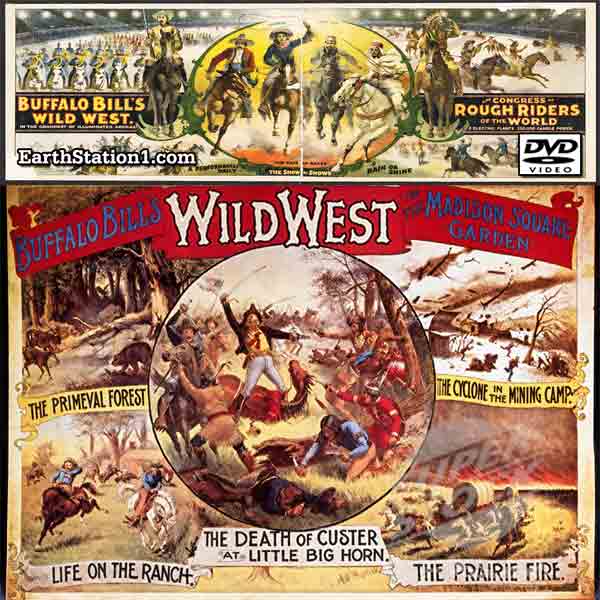
August 13, 1860: #BOTD: #HBD! Annie
Oakley, American sharpshooter, exhibition shooter and Wild West
performer (d. November 3, 1926) is #born Phoebe Ann Mosey in Darke
County, Ohio. Her "amazing talent" first came to light
at 15-years-old when she won a shooting match against
traveling-show marksman Frank E. Butler, whom she later married.
The couple joined Buffalo Bill's Wild West show a few years later
in 1885 and was one of the star attractions for 17 years. Oakley
became a renowned international star, performing before royalty
and heads of state. Oakley also was variously known as "Miss
Annie Oakley", "Little Sure Shot", "Little
Miss Sure Shot", "Watanya Cicilla", "Phoebe
Anne Oakley", "Mrs. Annie Oakley", "Mrs. Annie
Butler", and "Mrs. Frank Butler". Her death
certificate gives her name as "Annie Oakley Butler".
Annie Oakley died of pernicious anemia in Greenville, Ohio, at the
age of 66. She was cremated and her ashes buried at Brock
Cemetery, near Greenville, Ohio. Her husband Frank E. Butler was
so distraught by her death that he stopped eating and died 18 days
later in Ferndale, Michigan; he was buried next to her burial.
After her death, her incomplete autobiography was given to stage
comedian Fred Stone, and it was discovered that her entire fortune
had been spent on her family and her charities. On Sale Until
Midnight Tonight PT!
https://store.earthstation1.com/buffalo-bill-amp-the-american-wild-west-shows-mp4-video-download-dv4.html
Today's
EarthStation1.com #OnThisDay Commemorative Memorial Title:
Information Please Radio Quiz Show MP3 DVD, Audio Download, USB
Drive
Today, August 13, 2026 August 13, 1991: #DOTD: #RIP: James
Roosevelt, American general, Marine, Navy Cross recipient,
businessman, activist, and Democratic Party politician (b.
December 23, 1907) #dies in Newport Beach, California of
complications arising from a stroke and Parkinson's disease. He
was 83 and was the last surviving child of Franklin and Eleanor
Roosevelt. He is buried at Pacific View Memorial Park cemetery in
Corona Del Mar, California. James Roosevelt was born in New York
City at 123 East 36th Street. He was the eldest son of President
Franklin D. Roosevelt and Eleanor Roosevelt, and was named after
his grandfather on his father's side, James Roosevelt I. He
attended the Potomac School and St. Albans School in Washington,
D.C., and the Groton School in Massachusetts. At Groton, he rowed,
played football, and was a prefect in his senior year. After
graduating in 1926, he attended Harvard, where he rowed with the
freshman and junior varsity crews. At Harvard, he followed family
traditions in joining the Signet Society and Hasty Pudding Club,
of which both his father and his maternal granduncle and paternal
fifth cousin once removed, President Theodore Roosevelt, had been
members, the Fly Club, which his father had joined, and the
Institute of the 1770. He graduated from Harvard in 1930 and was
elected permanent treasurer of his class. After graduation,
Roosevelt enrolled in the Boston University School of Law. He also
took a sales job with the firm of Victor De Gerard of Boston in
1930, remaining with that firm when it amalgamated with the John
Paulding Meade Company which, in turn, amalgamated with O'Brion,
Russell and Company in 1932. Roosevelt abandoned his law studies
within a year due to his success at the firm. In 1932, he started
his own insurance agency, Roosevelt amp; Sargent, in partnership
with John A. Sargent. As president of Roosevelt amp; Sargent he
made a substantial fortune (about 500K USD (over 9M USD in 2018
USD). He resigned from the firm in July 1937, when he officially
went to work at the White House as an official Secretary To The
President for his father until November 1938, but retained his
half-ownership. Roosevelt was elected a director of Boston
Metropolitan Buildings, Inc. in 1933. He also served briefly as
president of the National Grain Yeast Corporation from May to
November 1935. When American became involved in the Second World
War, despite occasionally debilitating health problems, Roosevelt
served with the 2nd Raiders, both at Midway during The Battle Of
Midway in early June 1942 and in the Raid On Makin Island on
August 17-18, 1942, where he and 22 others were awarded the Navy
Cross. In October, he was given command of the new 4th Raiders,
but during training for an upcoming combat operation he became so
ill he had to be hospitalized by February 1943. Beginning in
August 1943, he served in various staff positions for the duration
of the war. He was attached to and landed with the U.S. Army's
165th Regimental Combat Team, 27th infantry Division during the
invasion of The Battle Of Makin on November 20-23, and was awarded
the Silver Star by the army. He was promoted to colonel on April
13, 1944. He was released from active duty in August 1945 and was
placed on the inactive list in October 1945; that same month, he
became a Compatriot Of The Empire State Society of the Sons Of The
American Revolution. Roosevelt continued in the Marine Corps
Reserve and retired on October 1, 1959, with the advanced rank of
Brigadier General. Roosevelt suffered from flat feet, and was
allowed to wear sneakers while other Marines were required to wear
boots.James Roosevelt was later elected to the United States House
Of Representatives representing California, serving 5 terms from
1955 to 1965.
https://store.earthstation1.com/complete-information-please-quiz-show-old-time-radio-mp3-dv3.html
August 13, 1991: #DOTD: #RIP: James
Roosevelt, American general, Marine, Navy Cross recipient,
businessman, activist, and Democratic Party politician (b.
December 23, 1907) #dies in Newport Beach, California of
complications arising from a stroke and Parkinson's disease. He
was 83 and was the last surviving child of Franklin and Eleanor
Roosevelt. He is buried at Pacific View Memorial Park cemetery in
Corona Del Mar, California. James Roosevelt was born in New York
City at 123 East 36th Street. He was the eldest son of President
Franklin D. Roosevelt and Eleanor Roosevelt, and was named after
his grandfather on his father's side, James Roosevelt I. He
attended the Potomac School and St. Albans School in Washington,
D.C., and the Groton School in Massachusetts. At Groton, he rowed,
played football, and was a prefect in his senior year. After
graduating in 1926, he attended Harvard, where he rowed with the
freshman and junior varsity crews. At Harvard, he followed family
traditions in joining the Signet Society and Hasty Pudding Club,
of which both his father and his maternal granduncle and paternal
fifth cousin once removed, President Theodore Roosevelt, had been
members, the Fly Club, which his father had joined, and the
Institute of the 1770. He graduated from Harvard in 1930 and was
elected permanent treasurer of his class. After graduation,
Roosevelt enrolled in the Boston University School of Law. He also
took a sales job with the firm of Victor De Gerard of Boston in
1930, remaining with that firm when it amalgamated with the John
Paulding Meade Company which, in turn, amalgamated with O'Brion,
Russell and Company in 1932. Roosevelt abandoned his law studies
within a year due to his success at the firm. In 1932, he started
his own insurance agency, Roosevelt amp; Sargent, in partnership
with John A. Sargent. As president of Roosevelt amp; Sargent he
made a substantial fortune (about 500K USD (over 9M USD in 2018
USD). He resigned from the firm in July 1937, when he officially
went to work at the White House as an official Secretary To The
President for his father until November 1938, but retained his
half-ownership. Roosevelt was elected a director of Boston
Metropolitan Buildings, Inc. in 1933. He also served briefly as
president of the National Grain Yeast Corporation from May to
November 1935. When American became involved in the Second World
War, despite occasionally debilitating health problems, Roosevelt
served with the 2nd Raiders, both at Midway during The Battle Of
Midway in early June 1942 and in the Raid On Makin Island on
August 17-18, 1942, where he and 22 others were awarded the Navy
Cross. In October, he was given command of the new 4th Raiders,
but during training for an upcoming combat operation he became so
ill he had to be hospitalized by February 1943. Beginning in
August 1943, he served in various staff positions for the duration
of the war. He was attached to and landed with the U.S. Army's
165th Regimental Combat Team, 27th infantry Division during the
invasion of The Battle Of Makin on November 20-23, and was awarded
the Silver Star by the army. He was promoted to colonel on April
13, 1944. He was released from active duty in August 1945 and was
placed on the inactive list in October 1945; that same month, he
became a Compatriot Of The Empire State Society of the Sons Of The
American Revolution. Roosevelt continued in the Marine Corps
Reserve and retired on October 1, 1959, with the advanced rank of
Brigadier General. Roosevelt suffered from flat feet, and was
allowed to wear sneakers while other Marines were required to wear
boots.James Roosevelt was later elected to the United States House
Of Representatives representing California, serving 5 terms from
1955 to 1965.
https://store.earthstation1.com/complete-information-please-quiz-show-old-time-radio-mp3-dv3.html
Today's
EarthStation1.com #OnThisDay Commemorative Memorial Title: The Big
Four: Tycoons Of The First Transcontinental Railroad MP4 DVD
Today, August 13, 2026August 13, 1900: #DOTD: #RIP Collis
Potter Huntington, American industrialist and railway magnate, one
of "The Big Four" of western railroading (along with
Leland Stanford, Mark Hopkins, and Charles Crocker) who invested
in Theodore Judah's idea to build the Central Pacific Railroad as
part of the first U.S. transcontinental railroad (b. October 22,
1821) #dies at Camp Pine Knot, also known as Huntington Memorial
Camp, on Raquette Lake in the Adirondack Mountains of New York
State, built by William West Durant, the son of Thomas C. Durant,
financier and railroad promoter who was behind the Credit Mobilier
scandal. He is interred in a Classical-style mausoleum at the
Woodlawn Cemetery, Bronx, New York. Collis Potter Huntington was
born in Harwinton, Connecticut. Huntington helped lead and develop
other major interstate lines, such as the Southern Pacific
Railroad and the Chesapeake & Ohio Railway (C & O), which
he was recruited to help complete. The C & O, completed in
1873, fulfilled a long-held dream of Virginians of a rail link
from the James River at Richmond to the Ohio River Valley. The new
railroad facilities adjacent to the river there resulted in
expansion of the former small town of Guyandotte, West Virginia
into part of a new city which was named Huntington in his honor.
Turning attention to the eastern end of the line at Richmond,
Huntington directed the C & O's Peninsula Extension in
1881-82, which opened a pathway for West Virginia bituminous coal
to reach new coal piers on the harbor of Hampton Roads for export
shipping. He also is credited with the development of Newport News
Shipbuilding and Drydock Company, as well as the incorporation of
Newport News, Virginia as a new independent city. After his death,
both his nephew Henry E. Huntington and his stepson Archer M.
Huntington continued his work at Newport News. All three are
considered founding fathers in the community, with local features
named in honor of each. Much of the railroad and industrial
development which Collis P. Huntington envisioned and led are
still important activities in the early 21st century. The Southern
Pacific is now part of the Union Pacific Railroad, and the C &
O became part of CSX Transportation, each major U.S. railroad
systems. West Virginia coal is still transported by rail to be
loaded onto colliers at Hampton Roads. Nearby, Huntington Ingalls
Industries operates the massive shipyard at Newport News. From his
base in Washington, Huntington was a lobbyist for the Central
Pacific and the Southern Pacific in the 1870s and 1880s. The Big
Four had built a powerful political machine, which he had a large
role in running. He was generous in providing bribes to
politicians and congressmen. Revelation of his misdeeds in 1883
made him one of the most hated railroad men in the country.
Huntington defended himself: "The motives back of my actions
have been honest ones and results have redounded far more to the
benefit of California than they have to my own." In 1968,
Huntington was inducted into the Hall of Great Westerners of the
National Cowboy & Western Heritage Museum.
https://store.earthstation1.com/bigfotyoffit.html
Today's
EarthStation1.com #OnThisDay Commemorative Memorial Title: The War
Of The Worlds By H. G. Wells MP4 Video Download DVD
Today, August 13, 2026August 13, 1946: #DOTD: #RIP: H. G.
Wells, English writer, novelist, historian, and critic (b.
September 21, 1866) #dies aged 79 at his home at 13 Hanover
Terrace, overlooking Regent's Park, London, England In his preface
to the 1941 edition of The War in the Air, Wells had stated that
his epitaph should be: "I told you so. You damned fools".
Wells's body was cremated at Golders Green Crematorium on August
16, 1946; his ashes were subsequently scattered into the English
Channel at Old Harry Rocks, the most eastern point of the Jurassic
Coast and about 3.5 miles (5.6 km) from Swanage in Dorset. A
commemorative blue plaque in his honour was installed by the
Greater London Council at his home in Regent's Park in 1966. H. G.
Wells was born Herbert George Wells at Atlas House, 162 High
Street in Bromley, Kent. Called "Bertie" by his family,
he was prolific in many genres, including the novel, history,
politics, social commentary, and textbooks and rules for war
games. Wells is now best remembered for his science fiction novels
and is called a "father of science fiction", along with
Jules Verne and Hugo Gernsback. His most notable science fiction
works include The Time Machine (1895), The Island of Doctor Moreau
(1896), The Invisible Man (1897), The War Of The Worlds (1898) and
Things to Come (1936). He was nominated for the Nobel Prize in
Literature four times. Prior to 1933, Wells' books were widely
read in Germany and Austria. By 1933, he had attracted the
attention of German officials because of his criticism of the
political situation in Germany, and on 10 May 1933, Wells' books
were burned by the Nazi youth in Berlin's Opernplatz, and his
works were banned from libraries and bookstores. Wells, as
president of PEN International (Poets, Essayists, Novelists),
angered the Nazis by overseeing the expulsion of the German PEN
club from the international body in 1934 following the German
PEN's refusal to admit non-Aryan writers to its membership. At a
PEN conference in Ragusa, Wells refused to yield to Nazi
sympathisers who demanded that the exiled author Ernst Toller be
prevented from speaking. Near the end of the World War II, Allied
forces discovered "The Black Book", a secret list of
prominent British residents to be arrested, produced in 1940 by
the SS as part of the preparation for the proposed invasion of
Britain codenamed Operation Sea Lion, with Wells included in the
alphabetical list.
https://store.earthstation1.com/warofwobyhgw.html
Today's
EarthStation1.com #OnThisDay Commemorative Memorial Title: From
Star Wars To Jedi: The Making Of A Saga 1983 DVD, MP4, USB Drive
Today, August 13, 2026August 13, 2016: #DOTD: #RIP: Kenny
Baker, English actor and musician, best known for portraying the
character R2-D2 in the Star Wars science fiction movie franchise
(#b. August 24, 1934) #dies eleven days before his 82nd birthday,
following a brief undisclosed additional illness. He is buried at
Lytham Park Cemetery And Crematorium in Lytham Saint Annes, Fylde
Borough, Lancashire, England. Following the death of the actor it
was revealed by The Sun that he had fathered a son who had been
kept secret from his family and that they had contacted each other
on a number of occasions. Kenny Baker was born Kenneth George
Baker in Birmingham, Warwickshire, West Midlands, England.
Although his parents were of average height, Baker stood 3 ft 8 in
(1.12 m) as an adult. In 1951 Baker was approached on the street
by a woman who invited him to join a theatrical troupe of dwarves
and midgets. This was his first taste of show business. Later, he
joined a circus for a brief time, learned to ice skate and
appeared in many ice shows. He formed a successful comedy act
called the Minitones with entertainer Jack Purvis and played in
nightclubs. While working with Purvis and the Minitones, Baker was
selected by George Lucas to operate the robot ("droid")
R2-D2 in the science fiction feature film Star Wars, released in
1977. Baker recalled that he initially turned down the role. Baker
appears as R2-D2 in six of the episodic theatrical Star Wars
films, and played an additional role in 1983's Return of the Jedi
as Paploo, the Ewok who steals an Imperial speeder bike. He
revealed a feud between him and his co-star Anthony Daniels, who
played C-3PO, claiming Daniels had been rude to him on numerous
occasions, and stated that Daniels is rude to everyone, including
fans. Baker's other films include The Elephant Man, Time Bandits
(also with Jack Purvis), Willow (also with Purvis and Warwick
Davis), Flash Gordon, Amadeus and Jim Henson's Labyrinth. On
television, he appeared in the British medical drama Casualty. He
also had a part in the BBC production of The Chronicles of Narnia.
In the late 1990s, Baker launched a brief comedy career. He played
Casanova in the 1993 movie UFO. Baker resided in Preston,
Lancashire. He was married to actress Eileen Baker (who co-starred
with him in the 1977 film Wombling Free) from 1970 until she died
in 1993. Although Eileen also had dwarfism, this was not inherited
by their two children. Baker was invited to attend the premiere of
Star Wars: The Force Awakens in Los Angeles in December 2015, but
was too ill to travel to the US. He had been suffering from a lung
condition for years. Instead, Baker attended the film's premiere
in London.
https://store.earthstation1.com/from-star-wars-to-jedi-the-making-of-a-saga-dvd.html
Today's
EarthStation1.com #OnThisDay Commemorative Memorial Title: World
War 1 TV Series With Robert Ryan DVD, Video Download, USB Drive
Today, August 13, 2026August 13, 1871: #BOTD: #HBD: Karl
Liebknecht, German revolutionary socialist and anti-militarist who
opposed in the Reichstag Germany's involvement in World War I,
member of the Social Democratic Party of Germany (SPD) beginning
in 1900, one of its deputies in the Reichstag from 1912 to 1916,
where he represented the left-revolutionary wing of the party (d.
January 15, 1919) is #born Karl Paul August Friedrich Liebknecht
in Leipzig, Kingdom of Saxony, German Empire (modern Germany). In
1916 he was expelled from the SPD's parliamentary group for his
opposition to the Burgfriedenspolitik, the political truce between
all parties in the Reichstag while the war lasted. He twice spent
time in prison, first for writing an anti-militarism pamphlet in
1907 and then for his role in a 1916 antiwar demonstration. He was
released from the second under a general amnesty three weeks
before the end of the First World War. During the November
Revolution that broke out across Germany in the final days of the
war, Liebknecht proclaimed Germany a "Free Socialist
Republic" from the Berlin Palace on November 9, 1918. In
December, his call to make Germany a soviet republic was rejected
by the majority of the Reich Congress of Workers' and Soldiers'
Councils (Reichsratekongress). At the end of 1918, Liebknecht was
one of the founders of the Communist Party of Germany (KPD). He
had a leading role in Spartacist uprising. Both Karl Liebknecht
and Rosa Luxemburg, two of the most prominent socialists in
Germany, were tortured and murdered in Berlin by members of The
Freikorps' Guard Cavalry Rifle Division at the end of the
Spartacist Uprising after they had consulted with Gustav Noske,
who was a member of the Council of the People's Deputies,
Germany's interim government, and had responsibility for military
affairs. Although two of the men directly involved in the murders
were prosecuted, no one responsible for ordering their deaths was
ever brought to trial. Both Liebknecht and Luxemburg are buried at
the Friedrichsfelde Central Cemetery in Friedrichsfelde,
Lichtenberg, Berlin, Germany.
https://store.earthstation1.com/world-war-1-robert-ryan-4-dual-layer-dvds-26-episode-tv-se1426.html
Today's
EarthStation1.com #OnThisDay Commemorative Memorial Title: The
Romantic Spirit TV Series DVD, Video Download, USB Flash Drive
Today, August 13, 2026August 13, 1863: #DOTD: #RIP: Eugene
Delacroix, French painter, lithographer and muralist, Romantic
artist regarded from the outset of his career as the leader of the
French Romantic school, who together with his rival and enemy of
Romanticsim Jean-Auguste-Dominique Ingres, Delacroix is considered
one of the last old Masters of painting and is one of the few who
was ever photographed (b. April 26, 1798) #dies of a throat
infection at his home in Paris, France, aged 65. He is buried at
The Cimetiere Du Pere Lachaise in Paris. Eugene Delacroix was born
Ferdinand Victor Eugene Delacroixat Charenton-Saint-Maurice in
Ile-de-France, near Paris. His mother was Victoire Oeben, the
daughter of the cabinetmaker Jean-Francois Oeben. There are
medical reasons to believe that Eugene's legitimate father,
Charles-Francois Delacroix, was not able to procreate at the time
of Eugene's conception. Talleyrand (Charles-Maurice de
Talleyrand-Perigord, 1st Prince Of Benevento, then Prince Of
Talleyrand, French secularized clergyman, statesman and leading
diplomat) considered himself to be Eugene's real father, as he was
a friend of the family and successor of Charles Delacroix as
Minister of Foreign Affairs, and resumbled the adult Eugene in
appearance and character. After assuming his office as foreign
minister, Talleyrand dispatched Delacroix to The Hague in the
capacity of French ambassador to the then Batavian Republic.
Delacroix at that time suffered from erectile dysfunction, and
when he returned to Paris in early September 1797, he found his
wife pregnant. Talleyrand went on to assist Eugene in the form of
numerous anonymous commissions. Throughout his career as a
painter, he was protected by Talleyrand, who served successively
the Restoration and king Louis-Philippe, and ultimately as
ambassador of France in Great Britain, and later by Charles
Auguste Louis Joseph, duc de Morny, half-brother of Napoleon III
and speaker of the French House of Commons. His legitimate father,
Charles Delacroix, died in 1805, and his mother in 1814, leaving
16-year-old Eugene an orphan. Eugene had three much older
siblings: Charles-Henri Delacroix (1779-1845) rose to the rank of
General in Napoleon's army, Henriette (1780-1827) married the
diplomat Raymond de Verninac Saint-Maur (1762-1822), and Henri
born six years later was killed at the Battle Of Friedland during
the Napoleonic War Of The Fourth Coalition. As a painter and
muralist, Delacroix's use of expressive brushstrokes and his study
of the optical effects of colour profoundly shaped the work of the
Impressionists, while his passion for the exotic inspired the
artists of the Symbolist movement. A fine lithographer, Delacroix
illustrated various works of William Shakespeare, the Scottish
author Walter Scott, and the German author Johann Wolfgang von
Goethe. In contrast to the Neoclassical perfectionism of his chief
rival Ingres, Delacroix took for his inspiration the art of Rubens
and painters of the Venetian Renaissance, with an attendant
emphasis on colour and movement rather than clarity of outline and
carefully modelled form. Dramatic and romantic content
characterized the central themes of his maturity, and led him not
to the classical models of Greek and Roman art, but to travel in
North Africa, in search of the exotic. Friend and spiritual heir
to Theodore Gericault, Delacroix was also inspired by Lord Byron,
with whom he shared a strong identification with the "forces
of the sublime", of nature in often violent action. However,
Delacroix was given to neither sentimentality nor bombast, and his
Romanticism was that of an individualist. In the words of
Baudelaire, "Delacroix was passionately in love with passion,
but coldly determined to express passion as clearly as possible."
Victor Hugo as a young man declared his own life's mission as
"Delacroix or Bust!".
https://store.earthstation1.com/the-romantic-spirit-tv-series-all-14-episodes-5-dual-layer-d145.html
Today's
EarthStation1.com #OnThisDay Commemorative Memorial Title: Spying
For Uncle Sam: CIA Family's Cold War Work + Bonus DVD Download
Today, August 13, 2026August 13, 2010: #DOTD: #RIP: Edwin
Newman, American newscaster, journalist and author (b. January 25,
1919) #dies of pneumonia in Oxford, Oxfordshire, England, aged 91.
The public announcement of his death was delayed for a little over
a month (until September 15), to allow a period of private
mourning for his family. His burial details are not publicly
disclosed. Newman was survived by his wife and daughter. His wife
Rigel Newman died in May 2020, shortly followed by their daughter
in December 2020 aged 75, following years of ill health. Edwin
Newman was born Edwin Harold Newman in New York City. After
beginning his career with the wire services and serving in the
U.S. Navy during World War II, Edwin Harold Newman worked in radio
for CBS News. He is known for a 23-year career in television news
with the National Broadcasting Company, from 1961 to 1984, and for
his hosting and narration of numerous television documentaries.
Newman was born in New York City to Myron, a credit manager, and
Rose (nee Parker) Newman. His older brother was M.W. Newman, a
longtime reporter for the Chicago Daily News. His grandparents
were all Russian Jewish immigrants. Newman married Rigel Grell on
August 14, 1944. They had one daughter, Nancy, who was born on
October 6, 1945. After graduating from George Washington High
School Newman attended the University of Wisconsin at Madison,
serving on the staff of The Daily Cardinal and earning a
bachelor's degree in political science in 1940. He briefly did
postgraduate work in American government at Louisiana State
University before becoming a journalist. Newman initially worked
for the wire services: first for the International News Service as
a copy boy, mostly in the Senate, and then United Press. On
Sunday, December 7, 1941, the day of the attack on Pearl Harbor,
he heard the news during a radio concert. When he rang the office
asking if he should come in, the reply was "Hell yes!"
Newman took dictation for 12 hours as United Press reporters
phoned in their stories. He served in the United States Navy from
1942 to 1945 as a signal officer, stationed first in Trinidad and
then at the Brooklyn Navy Yard. Following the war Newman worked as
a reporter for United Press (1945-1946, primarily reporting about
the State Department), before moving to the CBS News radio
division (1947-1949) as assistant to Eric Sevareid. Between 1949
and 1952 Newman worked as a freelancer, primarily for NBC News. He
wrote for a number of publications and, in 1951, worked for the
Marshall Plan in Greece. In 1952, Newman began to work full-time
for NBC. He covered significant stories: the 1952 funeral of King
George VI from the freezing battlements of Windsor Castle;
Britain's emergence as a nuclear power; and the 1956 Suez Crisis.
At the same time, Newman enjoyed quirky stories; he once climbed a
tree in Kensington Gardens dressed in a hunting outfit (complete
with deerstalker hat and whistle) to investigate a report that
ducks were nesting in trees. Newman was an NBC bureau chief, first
in Rome and then in Paris. In both assignments, diplomatic and
political news (such as the twists and turns of the Cold War and
the increasingly divisive anti-colonial Algerian War) vied with
stories elsewhere in Europe and beyond. Newman covered the
accession to power of President Charles de Gaulle in 1958. He was
decorated as Chevalier of the Legion d'honneur for his coverage of
de Gaulle's funeral in 1970 and for improving the understanding of
France in the United States. Between 1961 and 1984, Newman
participated in a wide variety of NBC programs, primarily for NBC
News. He was a regular on the Today show and was its news anchor
from July 24 to December 22, 1961, then a contributor and guest
host. On Meet the Press, he was a frequent panelist and moderator.
From 1960 to 1984 Newman played a central role in NBC's coverage
of the Republican and Democratic national conventions, when
gavel-to-gavel coverage was the norm. In 1968 he, John Chancellor,
Frank McGee, and Sander Vanocur (dubbed "The Four Horsemen of
the Apocalypse") were fitted with state-of-the-art backpacks
enabling them to roam the convention floor and conduct live
interviews with delegates. Newman specialized in reporting
breaking news. In 1963, he made the first announcement on NBC
Radio of President John F. Kennedy's death. He anchored the
television coverage of the 1967 Six-Day Arab-Israeli War, the 1968
assassinations of Martin Luther King and Robert Kennedy and the
1973 Vietnam ceasefire. In 1981, immediately after the
assassination attempt on President Ronald Reagan, he was chosen to
anchor NBC's television coverage until full news teams were
mustered. Newman was the only radio journalist to interview
Emperor Hirohito (Emperor Showa) of Japan. The interview took
place in September 1975 at the Imperial Palace in Tokyo, shortly
before Hirohito's diplomatically-delicate visit to the United
States. For his program Speaking Freely, he conducted more than
250 hour-long interviews with leading figures of the day between
1967 and 1976. Among interviewees were director Ingmar Bergman,
zoologist Konrad Lorenz, classical guitarist Andres Segovia,
founder of Transcendental Meditation Maharishi Mahesh Yogi, boxer
Muhammad Ali, and the first prime minister of Israel, David
Ben-Gurion. The series was broadcast on Sunday mornings by local
New York station WNBC, and syndicated to other stations. Newman
moderated two presidential debates, both of which demanded the
calmness and courtesy for which he was known. The 1976 debate,
between incumbent Gerald Ford and Georgia governor Jimmy Carter,
was the first presidential debate since 1960 and was marred by a
27-minute loss of audio (during which the candidates stood
silently by their lecterns). In 1984, President Ronald Reagan
faced former Vice President Walter Mondale; when Reagan overran
the time limit for his closing statement, Newman was obliged to
cut off Reagan's remarks. Newman participated in a number of
documentaries at NBC, including Japan: East is West (1961); Who
Shall Live? (about kidney dialysis, 1965); Pensions: The Broken
Promise (1972); Violence in America (1977); Land of Hype and Glory
(1977); Spying for Uncle Sam (1978); Reading, Writing and Reefer
(1978); Oil and American Power (1979); and The Billionaire Hunts
(1981). Newman enjoyed music and hosted summer Boston Symphony
concerts from Tanglewood. He contributed to the work of the
Religious Affairs Unit at NBC, and was a Broadway drama critic
from 1965 to 1971. As a baseball and boxing aficionado from
childhood, he also enjoyed sports broadcasting. He provided
in-studio news updates in 1980, during the short-lived morning
version of The David Letterman Show. Newman also showed his
singing voice while on Saturday Night Live. He also wrote a book
called Strictly Speaking in 1974. After leaving NBC in January
1984 Newman was in demand as an interviewer, narrator, and
moderator, participating in many programs on PBS and cable
networks. One series to which he was particularly committed was
Congress: We the People. Beginning in 1983 Newman moderated annual
televised conferences of former Secretaries of State, and
conducted a series of interviews with Dean Rusk (US Secretary Of
State, 1961-69) for the Southern Center for International Studies
in Atlanta, Georgia. He narrated a series of programs about the
restoration of Michelangelo's frescoes in the Sistine Chapel. In
1988 he hosted and narrated an eight-part PBS documentary on the
technical and social history of television, produced by PBS
affiliates KCET and WNET. He was in demand to play himself in
films and on television. Among his film credits were The Pelican
Brief, Spies Like Us, and My Fellow Americans; television
appearances included episodes of Newhart, Mr. Belvedere, The
Golden Girls, Wings, and Murphy Brown. He lectured extensively on
the English language and the news business. In 1990, he was a
narrator for an Audio Renaissance dramatization of Ernest
Callenbach's utopian novel Ecotopia, reading the news reports of
William Weston as he tours the breakaway republic. Newman spent
his final years quietly, moving with his wife to England in 2007
to be nearer to their daughter. He died of pneumonia in Oxford on
August 13, 2010. The public announcement of his death was delayed
for a little over a month (until September 15), to allow a period
of private mourning for his family. Newman was survived by his
wife and daughter. Newman had a blend of seriousness and humor.
For a 1964 documentary he traveled from Paris on the Orient
Express, talking to people along the way and ending up in a bubble
bath in Istanbul. Newman enjoyed puns: when he worked on The Today
Show, his doggerel poem reviewing each year's events would end
"Happy Noo Year to Yoose from Edwin Newman NBC Noose".
Around the time Newman left NBC in 1984, he twice hosted Saturday
Night Live; on one occasion, to the delight of the audience, he
sang "Please Don't Talk About Me When I'm Gone" as part
of the opening monologue. On both occasions, as well as for a
third special guest appearance on the show later in the season, he
hosted the Saturday Night News faux newscast. In 1974 Newman's
first book, Strictly Speaking: Will America be the Death of
English? reached #1 on the New York Times nonfiction bestseller
list. A Civil Tongue followed in 1976, Sunday Punch (a comic
novel) in 1979, and I Must Say in 1988. The latter (a collection
of his syndicated columns for King Features) ranged over U.S.
politics and foreign policy, his journalistic assignments, and the
state of the English language. Newman served for a number of years
as chairman of the usage panel at Houghton Mifflin's American
Heritage Dictionary. Newman spent his final years quietly, moving
with his wife to England in 2007 to be nearer their daughter
Nancy.
https://store.earthstation1.com/spying-for-uncle-sam-cia-family39s-cold-war-dvd-mp4-394.html
Today's
EarthStation1.com #OnThisDay Commemorative Memorial Title: Yours
Truly Johnny Dollar Radio Series MP3 DVD, Download, USB Drive
Today, August 13, 2026August 13, 1983: #DOTD: #RIP: Bob Bailey,
an American movie film actor who performed mostly on radio in such
shows as Let George Do It and Yours Truly, Johnny Dollar (b. June
13, 1913) #dies in Lancaster, California aged 70 in a rest home,
ten years after he was admitted following a stroke. He is buried
at The Chapel Of The Pines Crematory in Los Angeles, California.
Bob Bailey was born Robert Bainter Bailey in Toledo, Ohio. One of
Bailey's earliest roles on radio was that of the title character
in the comedy serial Mortimer Gooch (1936-37) on CBS. In the early
1940s Bailey was regularly featured on network radio programs
originating from Chicago. He played the boyfriend of the title
character's sister in That Brewster Boy and the father of the
title character in Meet Corliss Archer. He played Bob Jones in
Kitty Keene, Inc.. He was signed in 1943 by 20th Century-Fox and
appeared in seven feature films; the first two (in which he was
most prominent) starred Laurel and Hardy. After the studio failed
to renew Bailey's one-year contract, he returned to radio.
Starting in 1946, Bailey starred as freelance detective George
Valentine in the radio drama Let George Do It, but he is best
remembered as the title character in the long-running radio series
Yours Truly, Johnny Dollar. The program ran from 1949 to 1962 (it
and Suspense were the last CBS radio drama series on the air until
the CBS Radio Mystery Theater began in 1974) and featured the
exploits of "America's fabulous freelance insurance
investigator"; Bailey starred as Johnny from 1955 to 1960 and
wrote the script for the December 22, 1957 episode "The
Carmen Kringle Matter" using the pen name "Robert
Bainter". With CBS devoting more money to television and
wanting to reduce costs, Yours Truly, Johnny Dollar relocated to
New York in 1960 and Bailey, unwilling to relocate, was dismissed.
Having performed in almost 500 episodes, he had made the role his
own. With the end of his involvement, the show wound down over the
following two years (with two different actors) before being taken
off the air in 1962, by which time Bailey had virtually given up
acting. Near the end of the 1962 film Birdman of Alcatraz, he can
be seen as one of the reporters gathered around Burt Lancaster and
Edmond O'Brien; O'Brien had portrayed Johnny Dollar on the radio
from 1950 to 1952. Bailey's role was only a bit, and most of his
dialogue was dubbed by another actor.
https://store.earthstation1.com/yours-truly-johnny-dollar-old-time-radio-dual-layer-mp3-dv3.html
Today's
EarthStation1.com #OnThisDay Commemorative Memorial Title: WWII
Films: Combat Medicine And Post War Plans DVD, MP4, USB Drive
Today, August 13, 2026August 13, 1910: #DOTD: #RIP: Florence
Nightingale OM (The Order Of Merit) RRC (The Royal Red Cross) DStJ
(The Most Venerable Order Of The Hospital Of Saint John Of
Jerusalem), celebrated Italian-English social reformer,
statistician, mystic, icon of Victorian culture and the founder of
modern nursing, nicknamed "The Lady With The Lamp"
because of her habit of making rounds of wounded soldiers at
night, who gave nursing a favourable reputation and came to
prominence while serving as a manager and trainer of nurses during
the Crimean War, in which she organised care for wounded soldiers
at Constantinople, significantly reduced death rates by improving
hygiene and living standards (b. May 12, 1820) #dies peacefully in
her sleep in her room at 10 South Street, Mayfair, London at the
age of 90. The offer of burial in Westminster Abbey was declined
by her relatives, and she is buried in the churchyard of St
Margaret's Church in East Wellow, Hampshire, near Embley Park with
a memorial with just her initials and dates of birth and death.
She left a large body of work, including several hundred notes
that were previously unpublished. A memorial monument to
Nightingale was created in Carrara marble by Francis William
Sargant in 1913 and placed in the cloister of the Basilica of
Santa Croce, in Florence, Italy. Florence Nightingale was born
into a wealthy and well-connected British family at the Villa
Colombaia in Florence, Tuscany, Italy, and was named after the
city of her birth. Recent commentators have asserted that
Nightingale's Crimean War achievements were exaggerated by the
media at the time, but critics agree on the importance of her
later work in professionalising nursing roles for women. In 1860,
she laid the foundation of professional nursing with the
establishment of her nursing school at St Thomas' Hospital in
London. It was the first secular nursing school in the world and
is now part of King's College London. In recognition of her
pioneering work in nursing, the Nightingale Pledge taken by new
nurses, and the Florence Nightingale Medal, the highest
international distinction a nurse can achieve, were named in her
honour, and the annual International Nurses Day is celebrated on
her birthday. Her social reforms included improving healthcare for
all sections of British society, advocating better hunger relief
in India, helping to abolish prostitution laws that were harsh for
women, and expanding the acceptable forms of female participation
in the workforce. Nightingale was a pioneer in statistics; she
represented her analysis in graphical forms to ease drawing
conclusions and actionables from data. She is famous for usage of
the polar area diagram, also called the Nightingale rose diagram,
equivalent to a modern circular histogram. This diagram is still
regularly used in data visualisation. Nightingale was a prodigious
and versatile writer. In her lifetime, much of her published work
was concerned with spreading medical knowledge. Some of her tracts
were written in simple English so that they could easily be
understood by those with poor literary skills. She was also a
pioneer in data visualisation with the use of infographics, using
graphical presentations of statistical data in an effective way.
Much of her writing, including her extensive work on religion and
mysticism, has only been published posthumously. Despite being
born and raised a Unitarian, Nightingale's own (rare) references
to conventional Unitarianism are mildly negative. She remained in
the Church of England throughout her life, albeit with unorthodox
views. Influenced from an early age by the Wesleyan Methodist
Tradition, Nightingale felt that genuine religion should manifest
in active care and love for others. She wrote a work of theology,
"Suggestions For Thought", her own theodicy (a
philosophy of religion that attempts to resolve the existence of
evil in a universe where all power and goodness are ascribed to
God), which develops her heterodox (other than orthodox) religious
ideas. Nightingale questioned the goodness of a God who would
condemn souls to hell, and was a believer in universal
reconciliation - the concept that even those who die without being
"saved" will nonetheless eventually make it to heaven.
She would sometimes comfort those in her care with this view. For
example, a dying young prostitute being tended by Nightingale was
concerned she was going to hell, and said to her "Pray God,
that you may never be in the despair I am in at this time"'
Nightingale replied "Oh, my girl, are you not now more
merciful than the God you think you are going to? Yet the real God
is far more merciful than any human creature ever was or can ever
imagine."
https://store.earthstation1.com/wwii-films-medicine-the-americas-and-post-war-plans-dvd.html